
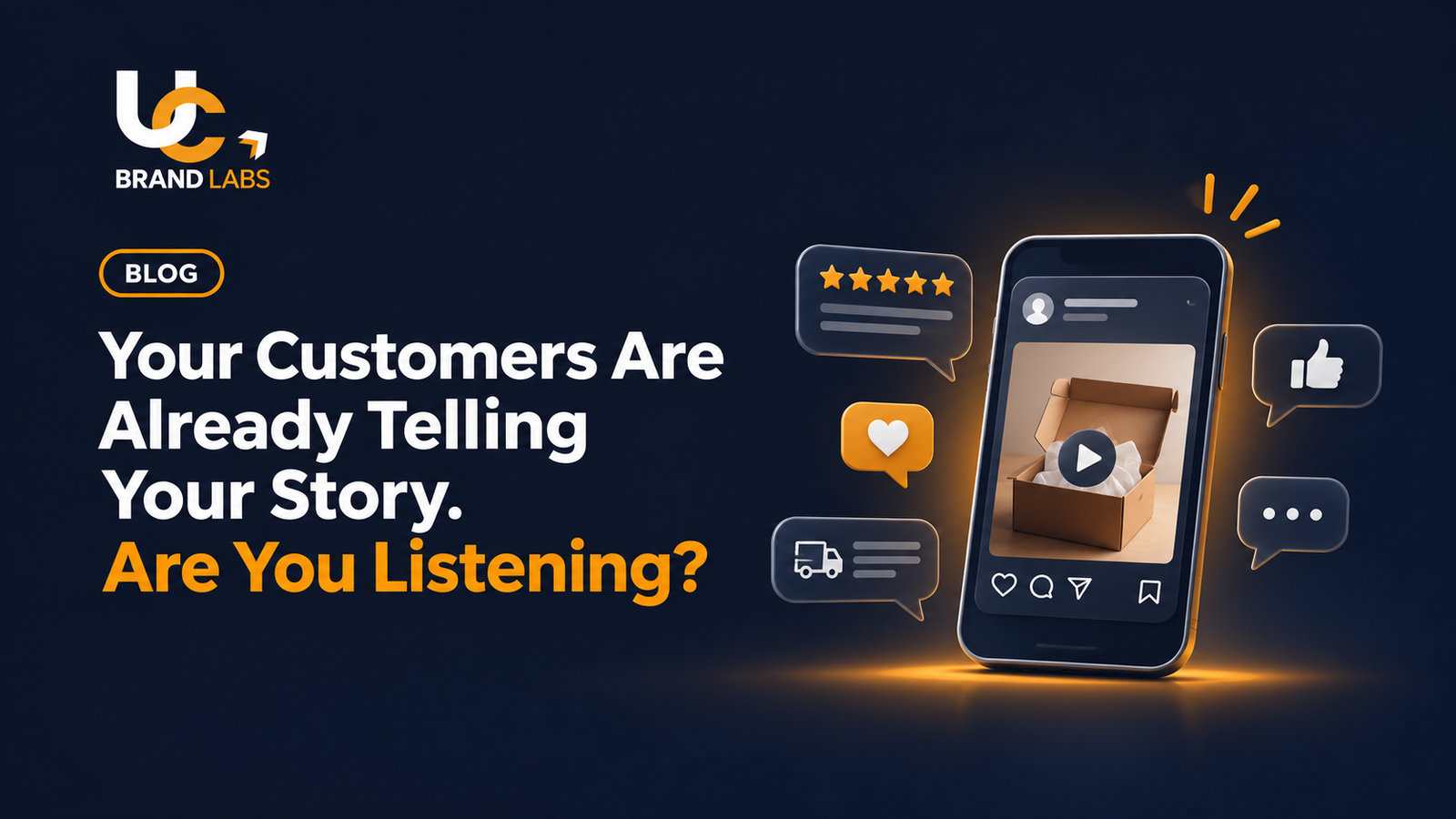
A customer posts an unboxing video. Another leaves a detailed product review. Someone recommends your product in an Instagram comment, while another shares a complaint about their delivery experience. These conversations may look like separate interactions, but together they shape how people see your brand.
For D2C brands, user-generated content (UGC) is more than social media content; it is a source of customer insight, social proof and brand storytelling. The opportunity is not simply to collect positive reviews. It is to listen to what customers are saying, understand their experiences and use those insights to improve communication, products and marketing.
What Is User-Generated Content (UGC)?
User-generated content refers to content created and shared by customers or users rather than produced directly by a brand. It can include product reviews, testimonials, photos, videos, unboxing posts, social media mentions and customer recommendations.
For example, when a customer shares a video showing how they use a skincare product, they are creating UGC. When another customer writes about the quality of a product on an ecommerce website, that review becomes another form of customer-generated content.
Unlike traditional brand advertising, UGC comes from real customer experiences. It gives potential buyers another perspective on a product beyond the claims made by the company.
For a D2C business, this content can support UGC marketing, customer engagement, social proof and brand trust. However, its value depends on authenticity. A genuine customer experience is more useful than a scripted review designed only to promote a product.
Why Customer Voices Matter for D2C Brand Trust
When customers discover a new brand, they often want to understand what other buyers think before making a purchase. They may check product ratings, read reviews, watch demonstrations or look for recommendations on social media.
Customer experiences help answer practical questions:
Does the product work as described?
Is the quality worth the price?
Does the product look like its online images?
Is the buying and delivery experience reliable?
Would existing customers recommend it?
These conversations contribute to social proof: the influence that other people’s experiences and opinions can have on how someone evaluates a product or brand.
For D2C brands, this matters because customers interact directly with the brand through its website, social media channels and support teams. Every interaction can influence the next customer’s perception.
A brand may describe its product as easy to use, but a customer demonstrating that experience in a video provides another way for potential buyers to understand the benefit.
The lesson: Your brand story is not shaped only by what your business publishes. It is also shaped by what customers experience and share.
Where Can D2C Brands Listen to Customer Conversations?
Customer feedback does not arrive through one channel. It is spread across different digital touchpoints. Brands need to monitor these conversations instead of focusing only on likes, reach and follower growth.
- Social Media Comments and Mentions
Instagram, Facebook and other social platforms can reveal how customers respond to products, campaigns and brand communication.
Look for repeated questions, product recommendations, complaints, tagged posts and customer-created videos. These interactions can show what people appreciate and what they find confusing. - Ecommerce Reviews and Ratings
Product reviews can provide direct insight into customer experiences.
Pay attention to repeated comments about product quality, packaging, sizing, ingredients, usability, delivery and value for money. These details can help identify which benefits customers genuinely notice and which product expectations are not being met. - Website Feedback and Testimonials
Customer testimonials, product-page reviews and feedback forms can help brands understand how customers describe their experiences.
Review the language customers use. Their descriptions may reveal benefits or concerns that your existing product descriptions and marketing messages have overlooked. - Customer Support and Post-Purchase Communication
Support emails, WhatsApp conversations, return requests and post-purchase surveys can reveal problems that may not appear in public reviews.
For example, repeated questions about product usage may indicate that instructions on the website or packaging need improvement.
How to Turn Customer Feedback into a Stronger D2C Marketing Strategy
Listening is only the first step. The real value comes from using customer insights to make better marketing and business decisions.
Here are practical ways to turn customer conversations into action. - Identify Repeated Customer Themes
Do not treat every comment as an isolated observation. Look for patterns.
If several customers mention that a product is easy to carry, that may be a useful benefit to communicate in your marketing. If customers repeatedly complain about unclear instructions, the product information may need attention.
Separate feedback into categories such as product quality, pricing, packaging, delivery, usability and customer service. - Repurpose Authentic Customer Content
With appropriate permission, customer-created photos, videos and testimonials can become part of your content marketing strategy.
For example:
Use customer product photos in social media posts.
Feature genuine testimonials on relevant product pages.
Create short videos around customer experiences.
Include useful customer feedback in product demonstrations.
Use authentic customer content in advertising creatives where appropriate.
This helps your D2C campaigns reflect real product experiences instead of relying entirely on brand-created messages. - Improve Your Website and Product Messaging
Customer reviews can reveal the language buyers naturally use to describe a product.
Suppose customers repeatedly mention that a product is suitable for everyday use. If that accurately reflects the product, the brand could communicate this benefit more clearly in its product description.
Customer feedback can also identify missing information, unclear delivery policies or unanswered product questions.
This is particularly useful for improving the D2C website experience, product pages and purchase journey. - Respond to Positive and Negative Feedback
A thoughtful response shows customers that the brand is paying attention.
Thank customers for positive feedback. When someone raises a concern, acknowledge the issue and explain the next step. Avoid defensive or automated responses that do not address the actual problem.
Negative feedback should not automatically be treated as a marketing problem. Sometimes it identifies an operational or product issue that needs to be fixed. - Measure What Actually Improves
Track more than the number of customer posts or reviews collected.
Depending on the campaign, useful measures may include:
Engagement with customer-created content.
Click-through rate on UGC-led ads.
Product-page interactions.
Conversion rate.
Review volume and sentiment.
Repeat purchases and customer retention.
Compare results against relevant campaign baselines. Do not assume that more UGC automatically means more sales.
Common UGC Marketing Mistakes D2C Brands Should Avoid
Even when brands understand the value of customer content, a few mistakes can weaken its impact.
Ignoring negative feedback: Unanswered complaints can create the impression that the brand does not care.
Using content without permission: Always obtain appropriate permission before reusing customer photos, videos or testimonials in marketing.
Publishing misleading testimonials: Do not edit customer statements in ways that change their meaning or create false impressions.
Focusing only on positive reviews: Constructive criticism can reveal important product and service improvements.
Chasing engagement without a purpose: A popular customer post is not automatically connected to business results.
Making every customer interaction promotional: Customers should feel heard, not treated as advertising opportunities.
Authenticity should remain central to every UGC marketing activity.
How Can D2C Brands Build a Customer-Led Brand Story?
A customer-led brand does not simply ask people to promote its products. It creates opportunities for customers to share genuine experiences and participate in the brand community.
Start with simple actions:
Invite customers to leave honest product reviews after a purchase.
Encourage customers to share product experiences and tag the brand.
Feature customer stories with their permission.
Run relevant product-experience or community campaigns.
Respond to questions and feedback consistently.
Use recurring customer insights to improve products and communication.
Brands should make participation voluntary and avoid pressuring customers to provide positive feedback.
This approach connects customer experience with brand storytelling. Instead of relying only on what the company says about itself, the brand creates space for real customer experiences to become part of its identity.
Final Thoughts: Your Customers Are Part of Your Brand Story
A strong D2C brand does not communicate in only one direction. It listens, responds and learns from the people who buy its products.
Reviews can reveal what customers value. Social media conversations can highlight how people perceive the brand. Feedback can uncover problems that need attention. And authentic customer experiences can provide useful material for content and advertising campaigns.
The goal is not to turn every customer into a creator. It is to make customers feel heard and use their experiences to build a better brand.
At UC Brand Labs, we believe effective brand building connects strategy, customer understanding and consistent execution. Because sometimes, the most valuable insight about your brand is already being shared by the people who use it.
A customer posts an unboxing video. Another leaves a detailed product review. Someone recommends your product in an Instagram comment, while another shares a complaint about their delivery experience. These conversations may look like separate interactions, but together they shape how people perceive your brand.
For D2C brands, user-generated content (UGC) is more than social media content. It is a source of customer insight, social proof and brand storytelling. The opportunity is not simply to collect positive reviews. It is to listen to what customers are saying, understand their experiences and use those insights to improve communication, products and marketing.
What Is User-Generated Content (UGC)?
User-generated content refers to content created and shared by customers or users rather than produced directly by a brand. It includes product reviews, testimonials, photos, videos, unboxing posts, social media mentions and customer recommendations.
For example, when a customer shares a video showing how they use a skincare product, they are creating UGC. When another customer writes about the quality of a product on an ecommerce website, that review becomes another form of customer-generated content.
Unlike traditional brand advertising, UGC comes from customer experiences. It gives potential buyers another perspective on a product beyond the claims made by the company.
For a D2C business, this content can support UGC marketing, customer engagement, social proof and brand trust. However, its value depends on authenticity. A genuine customer experience is more useful than a scripted review designed only to promote a product.
Why Do Customer Voices Matter for D2C Brand Trust?
When customers discover a new brand, they often want to understand what other buyers think before making a purchase. They may check product ratings, read reviews, watch demonstrations or look for recommendations on social media.
Customer experiences help answer practical questions:
Does the product work as described?
Is the quality worth the price?
Does the product look like its online images?
Is the buying and delivery experience reliable?
Would existing customers recommend it?
These conversations contribute to social proof: the influence that other people’s experiences and opinions can have on how someone evaluates a product or brand.
For D2C brands, this matters because customers interact directly with the business through its website, social media channels and support teams. Every interaction can influence the next customer’s perception.
A brand may describe its product as easy to use, but a customer demonstrating that experience in a video provides another way for potential buyers to understand the benefit.
Your brand story is not shaped only by what your business publishes. It is also shaped by what customers experience and share. This connects closely with building a brand story that sounds authentic.
Where Can D2C Brands Listen to Customer Conversations?
Customer feedback does not arrive through one channel. It is spread across different digital touchpoints. Brands need to monitor these conversations instead of focusing only on likes, reach and follower growth. - Social Media Comments and Mentions
Instagram, Facebook and other social platforms can reveal how customers respond to products, campaigns and brand communication.
Look for repeated questions, product recommendations, complaints, tagged posts and customer-created videos. These interactions can show what people appreciate and what they find confusing.
For example, a customer repeatedly asking about product ingredients may indicate that the brand needs to communicate product information more clearly. Social platforms are also becoming important discovery channels, as explored in how customers may find D2C brands on Instagram before Google. - Ecommerce Reviews and Ratings
Product reviews provide direct insight into customer experiences.
Pay attention to repeated comments about product quality, packaging, sizing, ingredients, usability, delivery and value for money. These details can help identify which benefits customers genuinely notice and which expectations are not being met.
Reviews can also reveal useful customer language for improving product listings. See how to use customer reviews in marketplace product listings. - Website Feedback and Testimonials
Customer testimonials, product-page reviews and feedback forms can help brands understand how customers describe their experiences.
Review the language customers use. Their descriptions may reveal benefits or concerns that your existing product descriptions and marketing messages have overlooked. - Customer Support and Post-Purchase Communication
Support emails, WhatsApp conversations, return requests and post-purchase surveys can reveal problems that may not appear in public reviews.
For example, repeated questions about product usage may indicate that instructions on the website or packaging need improvement.
How to Turn Customer Feedback into a Stronger D2C Marketing Strategy
Listening is only the first step. The real value comes from using customer insights to make better marketing and business decisions. - Identify Repeated Customer Themes
Do not treat every comment as an isolated observation. Look for patterns.
If several customers mention that a product is easy to carry, that may be a useful benefit to communicate in your marketing, provided it accurately describes the product. If customers repeatedly complain about unclear instructions, the product information may need attention.
Organize feedback into categories such as product quality, pricing, packaging, delivery, usability and customer service. - Repurpose Authentic Customer Content
With appropriate permission, customer-created photos, videos and testimonials can become part of your content marketing strategy.
For example:
Use customer product photos in social media posts.
Feature genuine testimonials on relevant product pages.
Create short videos around customer experiences.
Include useful customer feedback in product demonstrations.
Test authentic customer content in advertising creatives.
This helps D2C campaigns reflect real product experiences instead of relying entirely on brand-created messages. - Improve Your Website and Product Messaging
Customer reviews can reveal the language buyers naturally use to describe a product.
Suppose customers repeatedly mention that a product is suitable for everyday use. If that accurately reflects the product, the brand could communicate this benefit more clearly in its product description.
Customer feedback can also identify missing information, unclear delivery policies or unanswered product questions.
This is particularly useful for improving the D2C website experience, product pages and purchase journey. Strong messaging should communicate customer benefits clearly, as discussed in UC Brand Labs’ guide to writing compelling brand copy. - Respond to Positive and Negative Feedback
A thoughtful response shows customers that the brand is paying attention.
Thank customers for positive feedback. When someone raises a concern, acknowledge the issue and explain the next step. Avoid defensive or automated responses that do not address the actual problem.
Negative feedback should not automatically be treated as a marketing problem. Sometimes it identifies an operational or product issue that needs to be fixed. - Measure What Actually Improves
Track more than the number of customer posts or reviews collected.
Depending on the campaign, useful measures may include:
Engagement with customer-created content.
Click-through rate on UGC-led ads.
Product-page interactions.
Conversion rate.
Review volume and recurring feedback themes.
Repeat purchases and customer retention.
Compare results against relevant campaign baselines. Do not assume that more UGC automatically means more sales.
Common UGC Marketing Mistakes D2C Brands Should Avoid
Even when brands understand the value of customer content, a few mistakes can weaken its impact.
Ignoring negative feedback: Unanswered complaints can create the impression that the brand does not care.
Using content without permission: Obtain appropriate permission before reusing customer photos, videos or testimonials in marketing.
Publishing misleading testimonials: Do not edit customer statements in ways that change their meaning or create false impressions.
Focusing only on positive reviews: Constructive criticism can reveal important product and service improvements.
Chasing engagement without a purpose: A popular customer post is not automatically connected to business results.
Making every interaction promotional: Customers should feel heard, not treated as advertising opportunities.
Authenticity is essential. For example, the US Federal Trade Commission’s guidance emphasizes truthful endorsements and reviews, including transparency about relevant brand relationships. Brands marketing internationally should also check the rules applicable in their target markets. FTC guidance on endorsements, influencers and reviews.
Federal Trade Commission+1
How Can D2C Brands Build a Customer-Led Brand Story?
A customer-led brand does not simply ask people to promote its products. It creates opportunities for customers to share genuine experiences and participate in the brand community.
Start with simple actions:
Invite customers to leave honest product reviews after a purchase.
Encourage customers to share product experiences and tag the brand.
Feature customer stories with their permission.
Run relevant product-experience or community campaigns.
Respond to questions and feedback consistently.
Use recurring customer insights to improve products and communication.
Keep participation voluntary. Never pressure customers to provide positive feedback or offer incentives in exchange for a favourable review where platform rules or applicable laws prohibit it. Google’s review policies, for example, prohibit incentivized reviews on Google Maps.
Maps User Generated Content Policy Help+1
The goal is to create an environment where customers feel comfortable sharing honest experiences. Over time, these interactions can help connect customer experience with brand storytelling.
Final Thoughts: Your Customers Are Part of Your Brand Story
A strong D2C brand does not communicate in only one direction. It listens, responds and learns from the people who buy its products.
Reviews can reveal what customers value. Social media conversations can highlight how people perceive the brand. Feedback can uncover problems that need attention. Authentic customer experiences can also provide useful material for content and advertising campaigns.
The goal is not to turn every customer into a creator. It is to make customers feel heard and use their experiences to build a better brand.
At UC Brand Labs, we believe effective brand building connects strategy, customer understanding and consistent execution. Because sometimes, the most valuable insight about your brand is already being shared by the people who use it.
