
Product Discovery Is Changing
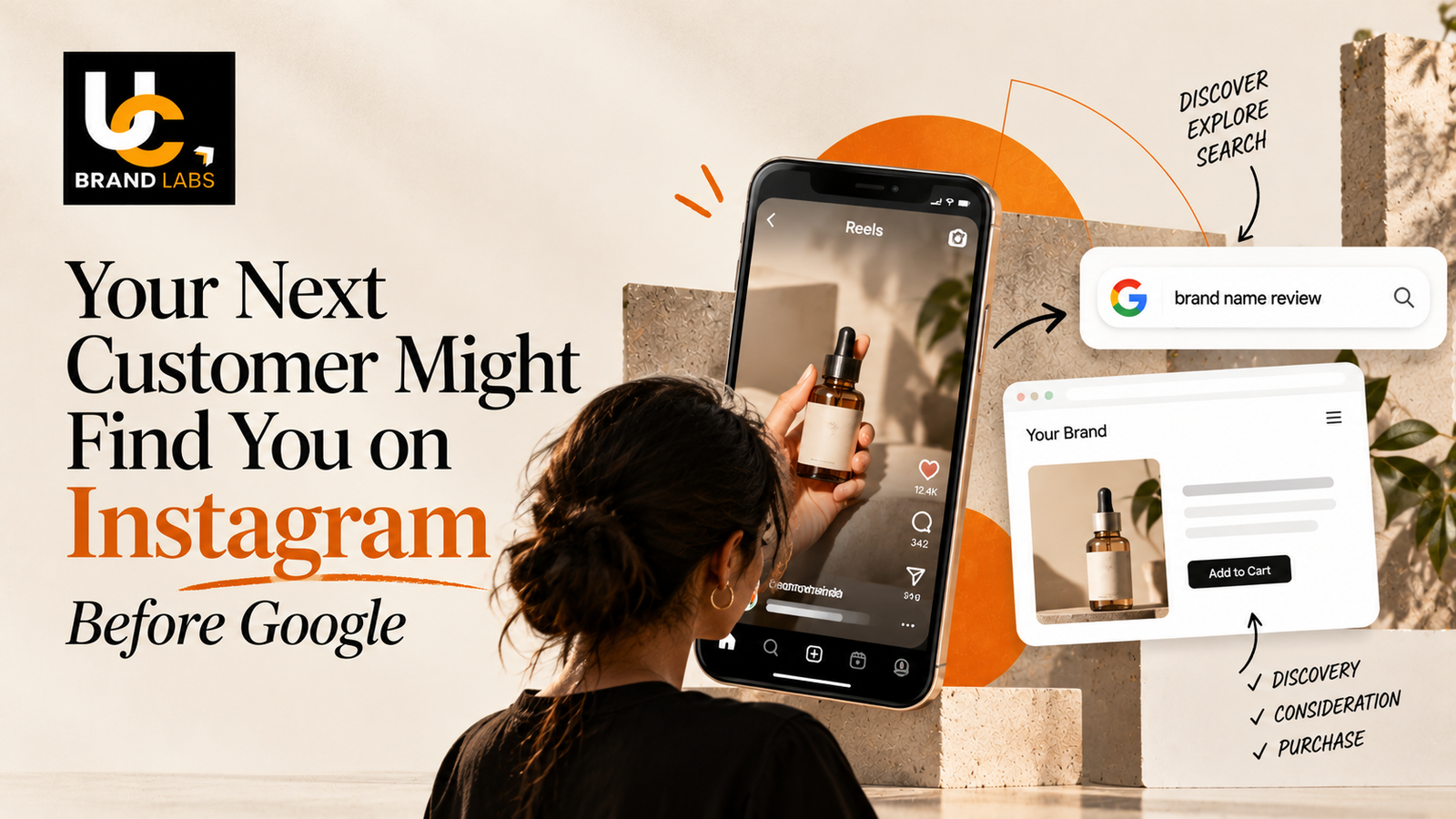
Imagine someone scrolling through Instagram when a Reel featuring a skincare routine catches their attention. They watch a product demonstration, explore the brand’s profile, and check customer reviews. Only then do they search for the brand on Google before placing an order.
For this customer, the buying journey started on Instagram, not a search engine.
This is an increasingly important consideration for D2C brands in India. Consumers can encounter products through short-form videos, creator recommendations, customer content, and social recommendations before actively searching for a solution.
Instagram hasn’t replaced Google. Instead, product discovery can begin on social platforms and continue through traditional search, a brand’s website, or an ecommerce marketplace.
For businesses developing a D2C marketing strategy, the opportunity is to build visibility wherever potential customers discover and evaluate products.
Why Customers Discover Products on Instagram
Instagram combines visual storytelling with content discovery, making it a useful channel for introducing products to potential customers.
Several content formats contribute to this experience.
Reels and short-form videos: A Reel can demonstrate how a product works, show its benefits, or explain a common problem it solves. For example, a hypothetical Indian skincare brand could demonstrate a simple morning routine featuring its products.
Creator recommendations: Relevant creators can introduce products through tutorials, reviews, and personal experiences. Their content gives audiences another way to understand a product before visiting the brand’s website.
Customer-generated content: Genuine customer reviews, unboxing videos, and product demonstrations can help prospective buyers evaluate products through real-world experiences.
Explore and recommendations: Instagram can surface content beyond a user’s existing following, creating opportunities for people to encounter unfamiliar brands.
Brand profiles: A well-organized profile helps interested visitors explore products, understand the brand’s positioning, and find the website.
Meta’s official Reels advertising guidance also highlights the role of short-form video in business marketing. Organic discovery and paid advertising are different, but both can contribute to a broader Instagram marketing strategy.
The takeaway? D2C brands should create content that helps people discover, understand, and evaluate their products—not simply promotional posts asking them to buy.
Instagram Search vs. Google Search
Instagram and Google serve overlapping but different purposes in the customer journey.
Instagram can introduce a product while someone browses content or explores recommendations. Google often helps people find specific information when they actively search for a brand, product, problem, or solution.
Factor
Instagram
Google
Discovery
Visual content, creators, and recommendations
Search queries and results
User behaviour
Browsing, exploring, and searching
Often driven by specific queries
Content formats
Reels, posts, Stories, and profiles
Websites, product pages, articles, and search features
Business value
Awareness, engagement, and product discovery
Research, consideration, and purchase intent
Consider a hypothetical fashion brand selling everyday ethnic wear. A customer might discover a new collection through an Instagram Reel, visit the profile to explore more designs, and search Google for the brand’s reviews or return policy.
Each interaction serves a purpose.
Instagram can help create initial interest, while Google and the brand’s website can help customers validate their choices. Neither channel guarantees a purchase, and the exact journey varies between customers.
How D2C Brands Can Improve Instagram Discoverability
Improving social discovery requires consistent, relevant content and a profile that makes the brand easy to understand.
- Optimize Your Instagram Profile
Use a recognizable brand name, a clear description, an appropriate business category, and a working website link.
Explain what you sell and whom you serve. A visitor should understand your offering without having to search through dozens of posts. - Create Search-Friendly Content
Write descriptive captions that naturally include relevant product terms. Use clear on-screen text and explain what appears in each video.
For instance, a fashion brand could describe a product as a lightweight cotton kurta rather than relying on a vague caption such as “Your next favourite.”
These practices help communicate context, but they do not guarantee higher rankings or reach. - Publish Useful Reels
Demonstrate products in realistic situations. Answer frequently asked questions, compare product features, explain usage, or show how an item fits into everyday life.
Prioritize usefulness and clarity over following every trending format. - Use Relevant Hashtags Thoughtfully
Choose a small, relevant selection of hashtags that accurately describes the product, category, or content.
Avoid filling captions with unrelated hashtags or assuming that hashtags alone will make a post discoverable. - Encourage Authentic Customer Content
Invite customers to share honest feedback, unboxing experiences, and product demonstrations. With appropriate permission, feature their content on your brand profile.
Authentic experiences can provide additional context for shoppers evaluating your products. - Collaborate With Relevant Creators
Look beyond follower counts. Consider audience alignment, credibility, content quality, and whether the creator can explain your product naturally.
For D2C brands, relevant recommendations may be more useful than partnerships chosen solely for visibility. - Maintain a Consistent Brand Identity
Keep your product names, messaging, visual identity, and descriptions consistent across Instagram and your website.
A recognizable brand experience makes it easier for customers to connect social content with the business they encounter elsewhere.
Why Your D2C Brand Still Needs Google
A strong Instagram presence should complement traditional SEO, not replace it.
Your website remains an important destination where customers can explore product specifications, prices, shipping information, return policies, and purchasing options.
Invest in optimized product and category pages, helpful blog content, technical SEO, and a straightforward buying experience.
For example, an Instagram Reel might introduce a customer to a new nutrition product. A Google search could then lead them to the brand’s website to examine its ingredients, product information, and purchasing terms.
This is why an effective D2C brand-building approach connects social media, search visibility, and the website rather than treating them as separate marketing activities.
The objective is to create a consistent experience across discovery, research, and purchase.
How to Measure Results
Track whether your Instagram marketing contributes to meaningful business outcomes.
Monitor these metrics:
Reach and engagement: Understand how many people encounter your content and how they interact with it.
Profile visits: Measure interest in your brand beyond an individual post.
Website link clicks: Track how many people move from Instagram to your website.
Referral traffic: Use website analytics to identify visits originating from Instagram.
Product page visits: Identify whether social visitors explore specific products.
Leads, conversions, and revenue: Measure business outcomes wherever reliable tracking is available.
Instagram Insights and website analytics can help connect content performance with customer activity.
However, engagement does not automatically translate into sales. Attribution can also be incomplete when someone discovers a product on Instagram but later purchases through Google or another channel.
Evaluate results across the customer journey rather than judging success by likes and views alone.
Frequently Asked Questions
Can customers discover D2C brands through Instagram search?
Yes. Customers can discover brands and products through Instagram search, relevant content, creator recommendations, and recommendations across the platform. Discovery opportunities vary with content, audience behaviour, and platform features.
Is Instagram marketing important for D2C brands?
Instagram can help D2C brands introduce products, demonstrate their benefits, build brand awareness, and encourage customers to explore their offerings. Its importance depends on the target audience, product category, and marketing objectives.
Should a D2C brand focus on Instagram or Google SEO?
Ideally, both. Instagram supports visual discovery and engagement, while Google can help customers research products and find relevant websites. The right balance depends on where your audience discovers, evaluates, and purchases products.
How can I improve my brand’s Instagram discoverability?
Optimize your profile, publish useful Reels, write descriptive captions, use relevant hashtags, collaborate with suitable creators, and encourage genuine customer content. Track performance and refine your approach using actual results.
Conclusion: Build Visibility Where Your Customers Discover Products
Your next customer might discover your brand through an Instagram Reel before searching for it on Google. Another might start with a search engine and find your website first.
D2C brands need to account for both possibilities.
Build an Instagram presence that introduces products effectively, maintain a website that answers customer questions, and invest in SEO that supports long-term discoverability.
If you’re looking to connect brand building, marketing strategy, and customer acquisition, explore UC Brand Labs’ Marketing & Growth Consulting.
The goal isn’t to choose between Instagram and Google. It’s to help customers find your brand, understand its value, and move confidently towards a purchase.
