
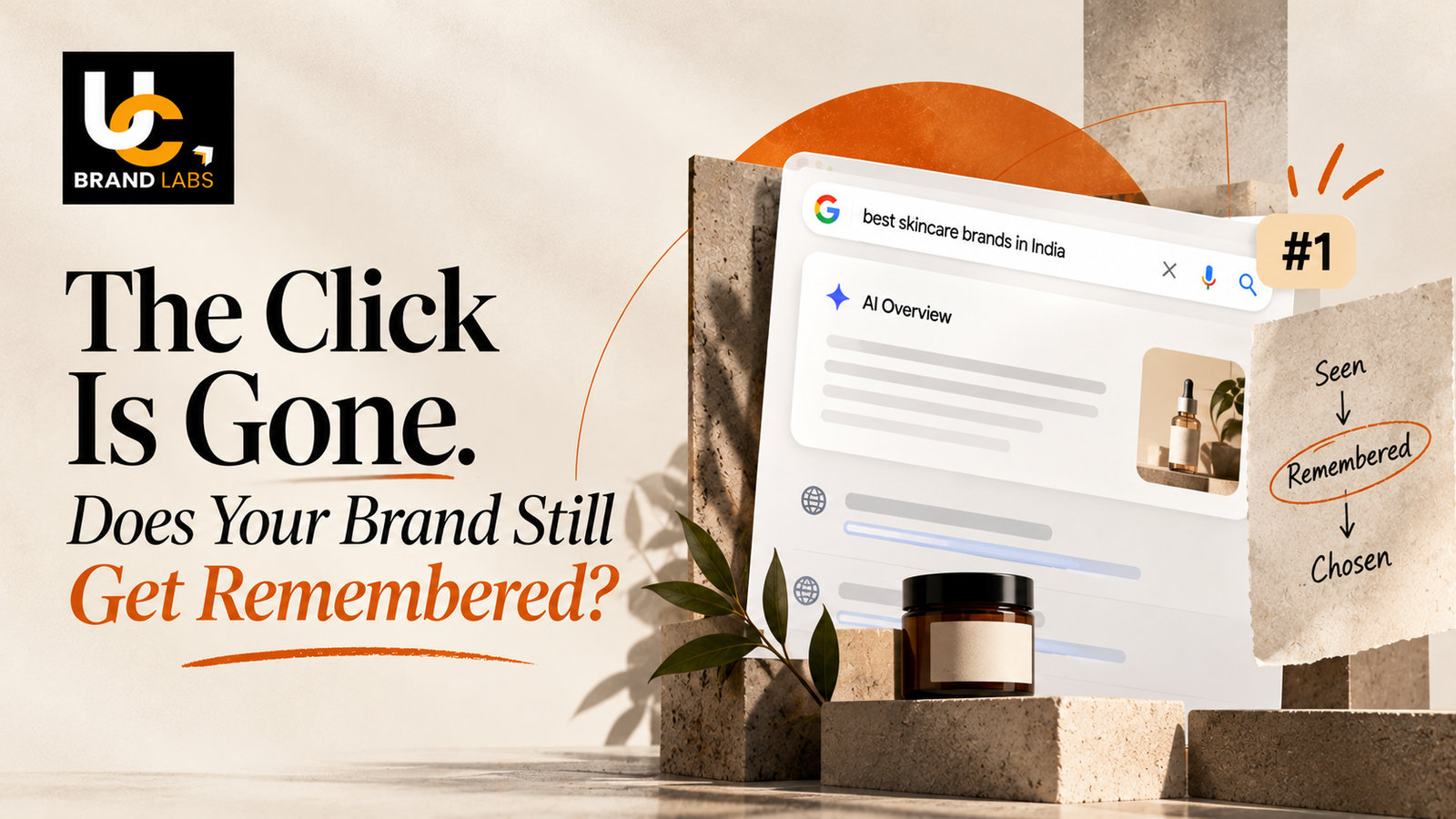
You finally rank #1 for your main product keyword. Impressions are up. But visits to your D2C website are flat, or falling.
The ranking is not the problem. The search results page has changed. More answers now appear before anyone clicks, so a top position no longer guarantees the same traffic.
Quick answer: A #1 ranking still brings clicks, but often fewer than before. Your brand can still influence buyers who never visit your site, though being seen is not the same as being remembered. Build a distinctive brand, keep your information consistent, and measure more than clicks.
Why Ranking #1 Can Bring Fewer Clicks
Zero-click search is a search that ends without a click to any website. Featured snippets, knowledge panels and AI-generated summaries can answer the question on the results page itself.
Research suggests AI summaries reduce clicking. A Pew Research Center analysis of US users’ March 2025 browsing found people clicked a traditional result link in 8% of visits with an AI summary, versus 15% without one. That study covers US users, so Indian behaviour may differ.
Three things can drive fewer clicks at the same position:
- Answers above your result. Summaries and snippets satisfy simple questions.
- More results page features. Shopping blocks, videos and panels compete for attention.
- Informational queries. Questions like “what is niacinamide?” are more likely to end without a click than “buy niacinamide serum.”
Check your own data first. In Google Search Console, look for queries where impressions are rising while clicks or CTR are falling. That pattern points to zero-click behaviour rather than a ranking loss.
Visibility, Traffic, Awareness, Recall: What Is the Difference?
These terms are often blurred together. They measure different things.
| Measure | What it tells you |
| Search visibility | How often you appear in results |
| Website traffic | How many people visit your site |
| Brand awareness | Whether people know you exist |
| Brand recall | Whether people remember you when they need your category |
| Conversions | Whether people buy |
A brand can be highly visible with weak recall. It can also be remembered and still lose the sale. Each needs its own measurement.
Does Being Seen Mean Being Remembered?
Not automatically. Appearing in an answer is exposure. Memory comes from repeated, credible exposure to something distinctive.
Brands are easier to recall when they have:
- A specific promise, such as “sunscreen for Indian skin tones” instead of “quality skincare.”
- A consistent name, tone and visual identity.
- Useful content that solves a real problem.
- Repeated exposure in several trusted places.
Whether an AI mention creates recall or purchase intent is still an open question. Impressions alone cannot answer it. Surveys and demand trends can.
Zero-Click Search and D2C Brands: An Example
This is an illustrative scenario, not a case study.
A customer researching skincare compares ingredients across brands for a week, without clicking every result. One brand clearly explains who its product is for, what it contains and what it does not claim. The others use generic copy. When she is ready to buy, the clearer brand is easier to recall.
The lesson: plan for two outcomes, immediate website conversions and longer-term brand demand.
D2C Brand Building in a Zero-Click World: 5 Practical Steps
Wondering how to build a D2C brand people remember? Start here.
- Create a distinctive position. State who the product serves, what problem it solves and why it is different. Our D2C brand building work starts at this point.
- Publish useful, specific content. Answer real customer questions with original comparisons, product detail and credible evidence.
- Keep brand information consistent. Names, claims and pricing should match across your website, marketplaces and social profiles. This guide to writing product listings that rank on marketplace search shows how.
- Make your site easy to find and understand. Keep pages crawlable, fast and well structured, with structured data that matches visible content. Practical website and platform improvements can help.
- Build demand beyond organic clicks. Consider PR, partnerships, creator collaborations and customer advocacy, so people meet your brand in more than one place.
No single tactic guarantees AI citations, recall or sales. Together, they improve your chances of being found and remembered.
How to Measure Brand Visibility Beyond Clicks
Combine standard SEO metrics with signals of brand strength.
| Metric | How to use it | Caution |
| Search Console impressions and CTR | Track exposure and click rates | Impressions show a link appeared, not how memorable you were |
| Branded search queries | Rising brand searches can signal growing awareness | Seasonality and campaigns can distort trends |
| Direct traffic | Watch for gradual shifts | Some visits are misattributed |
| Brand mentions and referrals | Track credible mentions and the visits they send | Mentions do not equal recall |
| Conversions and revenue | Measure business outcomes | Slow to reflect brand effects |
| Recall surveys | Ask how customers first heard of you | Needs a reasonable sample |
Google counts AI Overviews and AI Mode activity inside the Web search type of the Search Console Performance report. It has also added a Generative AI report that shows impressions, but not clicks.
Track these over months, not days. A single data point proves little.
Frequently Asked Questions
Does ranking #1 on Google still bring traffic?
Yes, but often less than before for queries that show AI summaries or snippets. Compare impressions and CTR in Search Console to see how your own queries are affected.
What is a zero-click search?
A search where the user gets what they need from the results page without visiting a website. Examples include featured snippets, knowledge panels and AI summaries.
Can customers remember a brand without visiting its website?
Possibly. Repeated, consistent exposure can build familiarity, but the effect varies and should be measured through surveys or branded-search trends.
How can D2C brands measure brand awareness from search?
Watch branded search volume in Search Console, add a “how did you hear about us?” field at checkout, and run periodic recall surveys.
Conclusion: Make Every Brand Exposure Count
A top ranking is still valuable, but a click is no longer the only result of search visibility. Build a distinctive identity, publish genuinely useful content, keep your information accurate everywhere, and measure both immediate sales and longer-term demand.
If you want help turning visibility into recognition, UC Brand Labs offers marketing and growth consulting for D2C brands. You can also contact the team to discuss your brand’s search presence.
