
Key Takeaways
- What customer segmentation means and why one marketing message cannot suit every audience.
- The five types of segmentation: demographic, geographic, behavioural, psychographic and purchase-based.
- How segmentation improves email marketing, paid advertising, website experiences and social media content.
- A practical customer segmentation example for a D2C coffee brand.
- Steps to build a customer segmentation strategy using available customer data.
- The difference between customer segmentation and personalisation.
- Common segmentation mistakes, including excessive targeting and ignoring customer privacy.
Imagine a D2C skincare brand running an advertisement that says, “Discover your perfect skincare routine.”
The message reaches thousands of people. Some are first-time skincare buyers. Others already understand ingredients and are looking for a specific solution. Some have purchased from the brand before, while others have never visited its website.
Will everyone respond to the same message?
Probably not.
A first-time buyer may need a simple explanation of the products. An existing customer may be more interested in a new launch. Someone who has already added a product to their cart may need reassurance about pricing, delivery or product suitability.
The product may be the same, but the customer’s reason for paying attention is different.
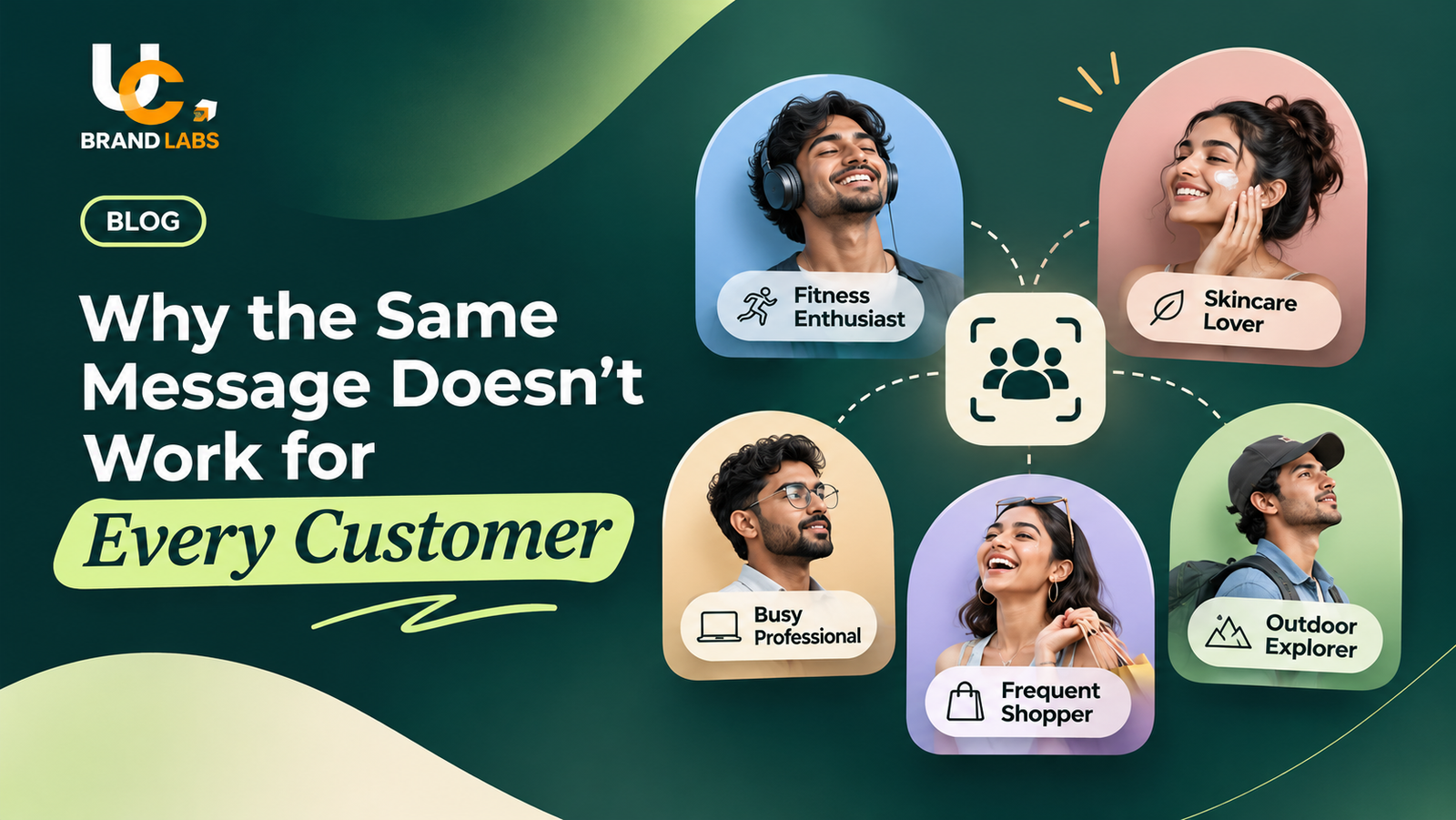
This is why customer segmentation matters. Instead of communicating with everyone in exactly the same way, brands can organise their audiences into meaningful groups and make their messages more relevant.
For D2C businesses, customer segmentation is not about creating hundreds of complicated audience lists. It is about understanding what different customers need and communicating accordingly.
What Is Customer Segmentation?
Customer segmentation is the process of dividing a broad customer base into smaller groups based on shared characteristics, behaviours, preferences or needs.
These groups help brands understand who they are communicating with and what type of message may be most relevant.
For example, a D2C fashion brand might organise its audience into groups such as:
- First-time website visitors.
- Existing customers.
- Customers interested in a particular product category.
- People who have added products to their cart.
- Customers who have not purchased in several months.
Each group has a different relationship with the brand.
A first-time visitor may need an introduction. A returning customer may respond to a relevant new collection. Someone who abandoned a cart may need product information or help completing the purchase.
Segmentation makes it possible to move beyond one generic message.
Why Doesn’t One Marketing Message Work for Everyone?
A message that feels relevant to one person may be unimportant to another.
There are several reasons behind this.
1. Customers Have Different Needs
Two people can visit the same website for completely different reasons.
A customer shopping for running shoes may prioritise comfort and support. Another may care more about design and everyday styling.
If the brand communicates only one benefit, it may fail to connect with part of its audience.
Understanding customer needs helps brands highlight the benefits that matter to different groups without making misleading product claims.
2. Customers Are at Different Stages of the Buying Journey
A person discovering a brand for the first time needs different information from someone who is ready to purchase.
Consider these three customers:
Customer A: The new visitor
They have just discovered the brand through Instagram. They may want to understand what the company sells and why its products are relevant.
Customer B: The interested shopper
They have explored a few product pages and are comparing available options. They may need product details, reviews or a comparison.
Customer C: The returning customer
They have purchased before. They may be interested in complementary products, new arrivals or useful product updates.
Showing all three customers the same introductory advertisement is unlikely to be the most relevant approach.
3. Customers Respond to Different Benefits
Some customers care about convenience. Others focus on price, quality, design, performance or product features.
For example, a D2C kitchen appliance brand may have customers interested in:
- Saving preparation time.
- Exploring different cooking options.
- Easy cleaning and maintenance.
- Product durability.
- Compact storage.
The brand can communicate different product benefits to different audience groups while keeping the underlying product information accurate.
4. Previous Interactions Change Customer Expectations
Someone who has already purchased a product does not need the same introduction as someone who has never heard of the brand.
Similarly, a visitor who has repeatedly explored a particular category may be more interested in relevant product information than a general brand-awareness message.
Customer interactions can help brands decide what to communicate next.
5 Common Types of Customer Segmentation
There is no single segmentation method that works for every business. The right approach depends on the product, available data and marketing objective.
1. Demographic Segmentation
Demographic segmentation groups customers using characteristics such as:
- Age.
- Income range.
- Occupation.
- Education level.
- Household or life stage.
For example, a brand selling educational products may develop different communication for parents of young children and parents of teenagers.
However, demographic information alone does not explain every purchase decision. Two people of the same age may have completely different preferences.
2. Geographic Segmentation
Geographic segmentation groups customers based on location.
This can be useful when products, delivery availability, weather, local preferences or regional campaigns differ.
For example, a fashion brand may promote different seasonal collections based on local climate.
A food delivery or grocery brand may communicate offers only in locations where its service is available.
3. Behavioural Segmentation
Behavioural segmentation looks at how people interact with a brand or product.
Examples include:
- First-time visitors.
- Repeat purchasers.
- Cart abandoners.
- Frequent website visitors.
- Customers interested in specific categories.
- Customers who respond to particular offers.
This can be especially useful for D2C marketing because website activity, purchase history and campaign interactions can help identify relevant customer groups, subject to appropriate consent and privacy requirements.
4. Psychographic Segmentation
Psychographic segmentation considers customer interests, lifestyles, values, attitudes and motivations.
For example, a sustainable lifestyle brand may communicate with customers who actively look for reusable, low-waste or responsibly sourced products.
A fitness brand might distinguish between customers interested in performance training and those focused on maintaining an active daily routine.
Psychographic insights can help brands understand why customers prefer certain products, not just what they purchase.
5. Purchase-Based Segmentation
Purchase-based segmentation uses transaction information to group customers.
Examples include:
- First-time buyers.
- Repeat buyers.
- High-frequency purchasers.
- Customers who purchase specific product categories.
- Customers who have not purchased recently.
- Customers with high or low average order values.
A D2C brand can use these groups to develop relevant post-purchase communication, replenishment reminders or product recommendations.
The goal should be to provide useful communication, not to send more messages simply because a customer belongs to a segment.
How to Use Customer Segmentation Across Marketing Channels
Segmentation becomes valuable when it influences the actual customer experience.
Email Marketing: Send Relevant Messages
Email is one of the practical channels for applying customer segmentation.
Instead of sending every subscriber the same email, a brand can create different communication based on customer behaviour and preferences.
For example:
| Customer segment | Possible email |
| New subscribers | Brand introduction and product guide |
| First-time buyers | Product usage tips and support |
| Repeat customers | Relevant new arrivals |
| Cart abandoners | Cart reminder and product information |
| Inactive customers | Relevant brand update or re-engagement message |
The content should reflect the customer’s relationship with the brand and respect their communication preferences.
Paid Advertising: Match the Creative to the Audience
Customer segmentation can also improve paid media execution.
A brand may use different creative messages for different eligible audience groups.
For example:
- New audiences: Introduce the product and its main benefit.
- Website visitors: Highlight relevant product features.
- Product viewers: Show product demonstrations or reviews.
- Existing customers: Introduce complementary products or new collections.
On platforms such as Meta and Google, available audience options and targeting capabilities depend on the campaign type, platform policies, privacy settings and account eligibility.
Segmentation should be used to improve relevance, not to assume that every user can be individually identified or targeted.
Website: Make Product Discovery More Relevant
The website experience can also respond to customer interests.
A D2C brand may organise products into useful categories, offer recommendation tools or display relevant guides based on the page being explored.
For example, a home décor website could guide visitors towards bedroom, living room or workspace collections.
The objective is to help customers find what they need without making navigation unnecessarily complicated.
Social Media: Create Content for Different Interests
Social media content does not need to communicate the same benefit every time.
A skincare brand could publish:
- Beginner-friendly skincare education.
- Ingredient explainers.
- Product demonstrations.
- Customer questions and answers.
- Routine-building guides.
Different content themes serve different audience needs while maintaining a consistent brand identity.
A Practical Example: Segmenting Customers for a D2C Coffee Brand
Consider a fictional D2C coffee brand selling ground coffee, coffee beans and brewing accessories.
Instead of communicating with every customer using the same promotional message, it could create a simple segmentation plan.
| Customer group | Customer need | Suitable message |
| New visitors | Understand the brand | Discover our coffee range |
| First-time buyers | Learn how to use the product | Explore brewing tips |
| Coffee enthusiasts | Understand product differences | Compare blends and roast profiles |
| Accessory shoppers | Find complementary products | Explore brewing accessories |
| Repeat customers | Discover something new | Explore new blends |
| Inactive customers | Find a relevant reason to return | Discover recent product updates |
Notice that the brand does not need six completely different identities or campaigns.
It needs one consistent brand voice with different messages based on customer context.
How to Build a Customer Segmentation Strategy
A useful segmentation process can begin with a few practical steps.
Step 1: Define the Marketing Objective
Start by identifying what you want to improve.
Is the goal to generate more qualified leads, improve repeat purchases, increase product discovery or make email communication more relevant?
The objective will determine which segments are useful.
Step 2: Identify the Data You Already Have
Review the information available through your website analytics, CRM, email platform and advertising platforms.
Depending on the business and applicable consent, this may include:
- Purchase history.
- Product categories explored.
- Website interactions.
- Email engagement.
- Customer preferences.
- Location and delivery information.
Avoid collecting data simply because it is available. Use information that has a clear purpose.
Step 3: Create Meaningful Segments
Begin with a small number of groups that are easy to understand and act upon.
For example, a new customer, repeat customer and inactive customer may be enough for an initial retention campaign.
More segments do not automatically mean better personalisation.
Step 4: Match Messages to Customer Needs
Decide what each group needs to know.
A first-time visitor may need product education, while a repeat customer may benefit from a relevant recommendation.
Keep the brand’s core positioning and voice consistent, even when the message changes.
Step 5: Test and Optimise
Compare how different messages perform.
Monitor metrics such as:
- Email open and click rates.
- Advertising CTR and conversion rate.
- Landing-page engagement.
- Lead quality.
- Repeat purchase rate.
- Revenue per customer.
Use the findings to refine segments and messaging. Do not assume that a segment will respond in a particular way without testing.
Customer Segmentation vs Personalisation: What’s the Difference?
These terms are connected, but they are not identical.
Customer segmentation is the process of grouping customers based on shared characteristics or behaviours.
Personalisation uses relevant information to adapt the experience or message for an individual or audience group.
| Customer segmentation | Personalisation |
| Groups customers into meaningful categories | Adapts content or experiences |
| Identifies shared needs or behaviours | Uses those insights to improve relevance |
| Helps plan audience communication | Shapes what customers actually see |
| Example: Repeat purchasers | Example: Showing a repeat purchaser relevant complementary products |
Segmentation can support personalisation, but personalisation does not always require highly detailed individual customer profiles.
Even simple changes, such as showing first-time visitors an introductory message and existing customers a product update, can make communication more relevant.
Common Customer Segmentation Mistakes
Creating too many segments: Excessive segmentation can make campaigns difficult to manage and measure.
Relying only on demographics: Age or location may not explain a customer’s actual purchase motivation.
Using outdated data: Customer preferences and behaviour can change. Segments should be reviewed regularly.
Sending irrelevant personalised messages: A message that uses someone’s name but ignores their actual needs is not meaningful personalisation.
Ignoring customer privacy: Brands should follow applicable privacy requirements, respect consent and be transparent about data usage.
Failing to measure results: Segmentation should improve marketing decisions. Its impact needs to be evaluated against the campaign objective.
Better Marketing Starts With Understanding the Customer
Customers do not all discover, evaluate or purchase products in the same way. Some need education, others want comparisons, and some already know what they are looking for.
When brands communicate with everyone using one generic message, they risk missing these differences.
Customer segmentation gives D2C businesses a more organised way to understand their audiences and create relevant communication across email, paid advertising, social media and websites.
The goal is not to make every customer feel that a message was written exclusively for them. It is to make sure the message they receive is useful to their needs and stage in the customer journey.
At UC Brand Labs, audience understanding connects closely with Marketing & Growth Consulting, Business Strategy & Planning and Branding & Positioning.
Because effective marketing is not always about saying more.
Sometimes, it is about saying the right thing to the right audience.
