
Key Takeaways
- Why video views alone are not enough to measure campaign success.
- How CTAs, retargeting and relevant landing pages move viewers towards action.
- Building a video marketing funnel across awareness, consideration, conversion and retention.
- Using follow-up videos and content to answer customer questions.
- Measuring video performance through watch time, CTR, website visits, leads, conversions and ROAS.
- Common video marketing mistakes that prevent views from turning into meaningful results.
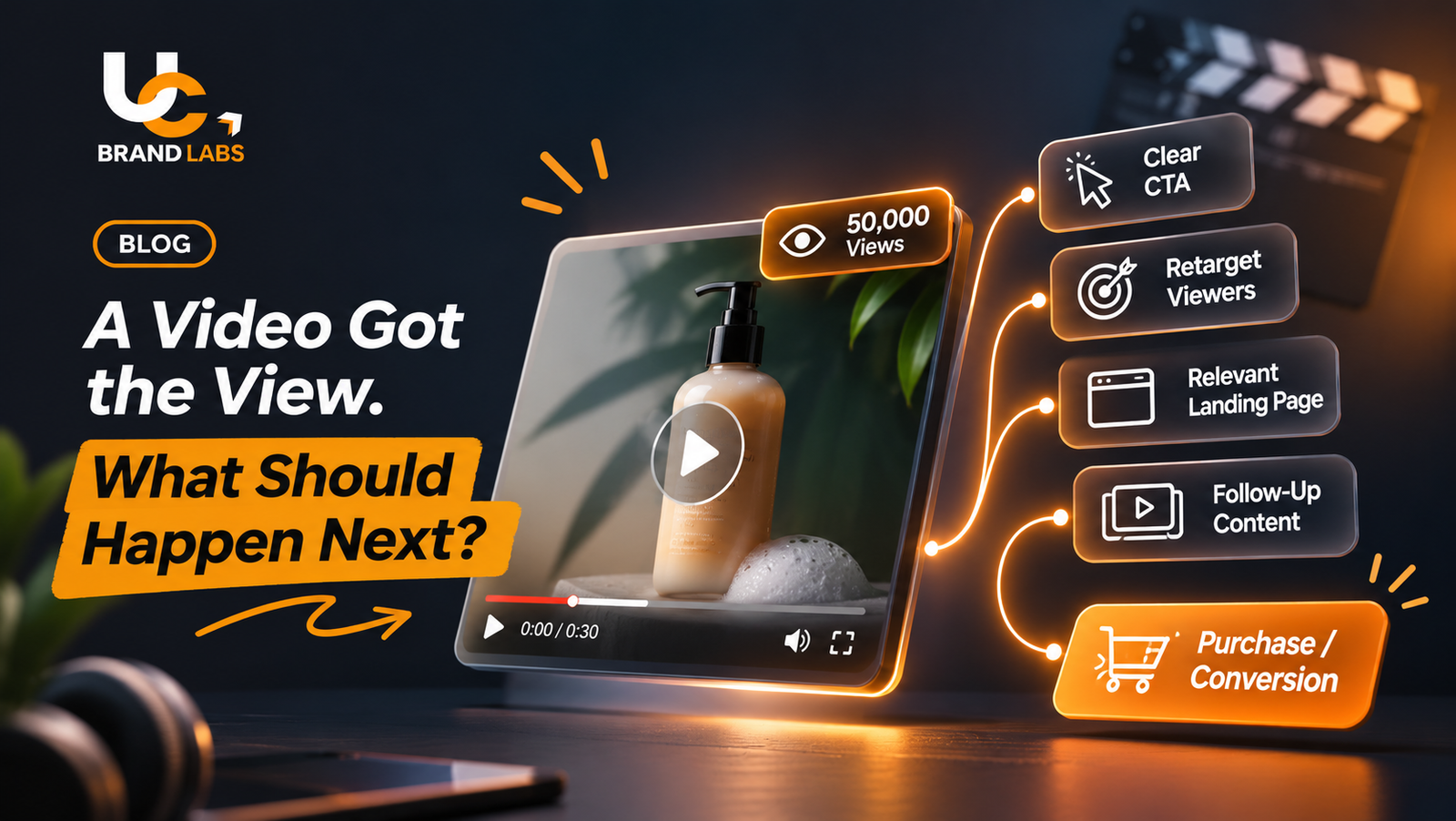
A video gets 50,000 views. The engagement looks encouraging, the comments are positive, and the marketing report shows that people watched the content. But a few days later, website traffic has barely changed. Product enquiries are limited, and sales remain almost the same.
So, what happened?
The video successfully attracted attention, but attention was only the first step. The real question is what the brand did after people watched it.
For D2C brands, video marketing should not end when someone finishes watching a reel, advertisement or product demonstration. Every video should have a purpose within the customer journey. It might introduce a product, answer a question, build trust or encourage someone to take the next step.
The opportunity is not simply to get more views. It is to understand how those views can contribute to a meaningful customer action.
Are Video Views Really a Measure of Success?
Video views are useful, but they only tell part of the story.
A person might watch a video because the opening was entertaining, the music was trending or the visual caught their attention. That does not necessarily mean they are interested in buying the product.
Consider a D2C skincare brand that publishes a reel about its new moisturiser. The reel receives thousands of views, but viewers may leave without understanding which skin concerns the product addresses, how to use it or where to purchase it.
The content attracted attention, but it did not necessarily help the audience make a decision.
A stronger video marketing approach considers three questions:
- Did the video reach the intended audience?
- Did viewers show meaningful interest in the message?
- Was there a relevant next step for interested viewers?
The answers help brands understand whether their videos are supporting awareness, consideration or conversion.
What Should Happen After Someone Watches Your Video?
The next action depends on the purpose of the video and the viewer’s level of interest.
1. Give Viewers a Clear Next Step
A video should not leave interested viewers wondering what to do next.
If the content introduces a product, direct viewers towards the relevant product page. If it explains a problem, offer a guide that helps them understand the solution. If it demonstrates a feature, make it easy to explore the product further.
For example, a D2C home décor brand publishes a video showing how a small living room can be transformed using its furniture collection.
Instead of ending with a generic message such as “Follow us for more”, the brand could encourage viewers to explore the featured collection.
Other useful calls to action include:
- Explore the product range.
- See how the product works.
- Compare available options.
- Read the complete product guide.
- Discover the collection.
The CTA should match the content. Asking someone to purchase immediately after watching a general awareness video may be premature.
2. Retarget Interested Viewers
Not everyone purchases after watching a video for the first time.
Some viewers may need more information, while others may be comparing alternatives or waiting for the right time to buy.
This is where video-viewer retargeting can help.
Platforms such as Meta and Google provide advertising options that allow eligible audiences to be reached again based on their interactions, subject to platform requirements, audience availability and privacy settings.
For example:
A skincare brand publishes a video explaining the benefits of a particular product. People who watch a meaningful portion of the video may become eligible for a relevant follow-up audience, depending on the platform and campaign setup.
The brand can then show them:
- A product demonstration.
- Customer testimonials or reviews.
- Frequently asked questions.
- A comparison of product options.
- A direct product-page advertisement.
The idea is to continue the conversation rather than repeatedly showing the same introductory video.
3. Connect the Video to a Relevant Landing Page
A video may create interest, but the destination determines what happens next.
Imagine someone watches an advertisement about a new fitness product. They click the CTA and land on a generic homepage containing dozens of unrelated products.
The customer now has to search again for the product they were interested in.
That creates unnecessary friction.
Instead, the advertisement should ideally direct viewers to a relevant destination containing:
- The featured product or collection.
- Clear product benefits.
- High-quality images or demonstrations.
- Pricing and important product information.
- Reviews or supporting information, where available.
- A visible next step.
The landing page should continue the same message that attracted the viewer in the first place.
4. Use Follow-Up Content to Answer Questions
A single video rarely answers every question a potential customer may have.
Someone might understand what the product does but still want to know how it works, whether it suits their needs or how it compares with alternatives.
Brands can create a connected content sequence.
For example, a D2C kitchen appliance brand could use:
Video 1: Awareness
Introduce the problem the product helps solve.
Video 2: Consideration
Demonstrate the product and explain its features.
Video 3: Trust
Show customer experiences, product reviews or a detailed demonstration.
Video 4: Conversion
Present the product, its key benefits and a clear purchase CTA.
This approach allows each piece of content to serve a different purpose instead of expecting one video to do everything.
Build a Video Marketing Funnel Instead of Publishing Isolated Videos
A useful video marketing strategy connects content with the stages of the customer journey.
| Funnel stage | Video purpose | Suggested next action |
| Awareness | Introduce a problem, product or brand | Explore more content |
| Consideration | Demonstrate features and benefits | Visit product or category page |
| Trust | Answer objections and show proof | Read reviews or compare options |
| Conversion | Present a relevant offer or solution | Purchase or enquire |
| Retention | Explain product usage and complementary products | Explore related products |
Not every customer follows this journey in a straight line. Some may purchase after one video, while others may need several interactions.
The purpose of the funnel is to make sure the brand has relevant content available at different stages.
How to Measure What Happens After the View
If the only metric in a video campaign report is views, the brand may miss important information about customer behaviour.
The right metrics depend on the campaign objective.
| Objective | Metrics to monitor |
| Brand awareness | Reach, impressions, frequency and video views |
| Video engagement | Average watch time, completion rate and engagement |
| Traffic generation | Link clicks, CTR and landing-page visits |
| Lead generation | Form submissions and qualified leads |
| Sales | Add-to-cart actions, purchases and conversion rate |
| Advertising efficiency | CPC, CPL, CPA and ROAS |
For example, a video may generate a high number of views but very few website visits. This could indicate that the CTA is unclear, the audience is not sufficiently interested or the video is designed more for entertainment than action.
Similarly, a video may receive fewer views but generate stronger purchase intent.
This is why brands should evaluate video performance against the campaign objective rather than judging every video using the same benchmark.
Common Video Marketing Mistakes to Avoid
Treating every video as a sales advertisement: Some videos should educate or build awareness before asking for a purchase.
Using generic CTAs: The next action should be connected to what the viewer has just watched.
Retargeting everyone with the same message: A person who watched a few seconds may need a different follow-up from someone who explored the product page.
Sending viewers to irrelevant pages: The landing-page experience should match the advertisement.
Ignoring the first few seconds: If the opening does not communicate relevance, viewers may leave before understanding the message.
Reporting views without business outcomes: Views are useful, but brands should also monitor what happens after the interaction.
Turn Video Attention Into a Meaningful Customer Journey
A successful video does not always need to generate an immediate purchase. Sometimes its job is to introduce a brand, explain a product or create enough interest for someone to explore further.
But brands should have a plan for what happens after that interaction.
The next video, the retargeting advertisement, the landing page and the follow-up message should work together. When each step has a clear purpose, video marketing becomes more than a content publishing exercise.
At UC Brand Labs, effective marketing and growth involve connecting creative communication with audience understanding, campaign execution and performance measurement. Explore our Marketing & Growth Consulting and Business Strategy & Planning services to understand how these elements can support a more connected growth approach.
Because getting the view is only the beginning. What your brand does next is what makes that attention valuable.
